




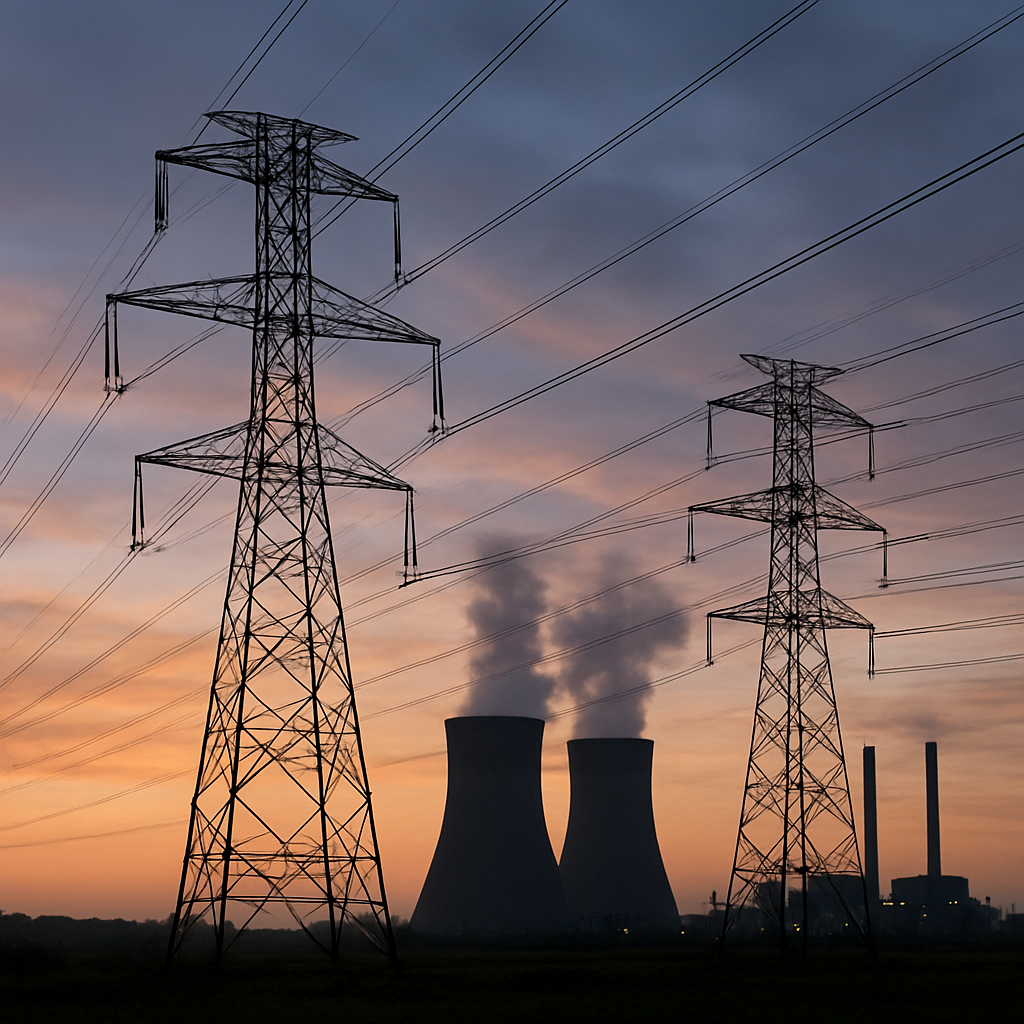

Eskom said on 6 November 2026 that South Africa has now gone 539 consecutive days without national loadshedding, as the state utility reported a financial year-to-date energy availability factor (EAF) of 68.16% and a sharp fall in diesel spending. The figures were published in a media statement on Eskom’s website on 6 November 2026.
The utility reported that generation improvements delivered under its Generation Recovery Plan have returned about 6,481MW of capacity compared with three years ago and reduced average unplanned outages from roughly 16,167MW to 9,092MW. Eskom said year-to-date spending on diesel-fired open-cycle gas turbines stood at R1.26 billion — R4.81 billion lower than the same period a year earlier — and that OCGTs were not used during the most recent week covered by the update.
Eskom also said seven of South Africa’s nine provinces are now free from targeted load reduction; about 1.59 million customers have been removed from load-reduction measures, shrinking the affected footprint by roughly 94% to around 102,551 customers. The utility said it had installed 526,689 smart meters on priority feeders and removed 627 feeders from load reduction, and reiterated a programme goal of eliminating load reduction by March 2027.
Renewables registrations and supply context
The improved headline performance comes as the energy sector records a surge of privately registered generation. The National Energy Regulator of South Africa (NERSA) said in a media statement on 5 November 2026 that it registered 144 generation facilities between July and September 2026, totalling 3,129MW and an estimated R78.16 billion of investment. Solar projects accounted for 139 of the registrations and 2,045MW, while three wind farms contributed 1,063MW. NERSA said most registrations will connect to Eskom’s network, and that average processing time for applications fell to nine working days.
Eskom’s statement stressed that available capacity currently exceeds forecast demand and that roughly 6,855MW sits above current requirements, creating headroom the utility said could support energy-intensive industry, new investment and potential export sales. Eskom also reported improved environmental performance and said relative particulate emissions remained within target to the end of September.
Analysis: why this matters and what to watch
Analysis: sustained availability and sharply lower diesel bills matter for South Africa’s fiscal and industrial outlook. Reduced reliance on diesel cuts operating costs for the utility and eases pressure on the public purse and municipal finances that have subsidised emergency generation in past years. Greater reliability removes a major constraint for investment decisions in energy-intensive sectors and may ease short-term inflationary risks tied to power disruptions.
However, registration of new private generation does not mean capacity is already delivering power; NERSA’s figures cover projects registered for connection and include large wind farms that will take time to build and commission. Key risks to watch are whether the improved EAF is sustained through the southern hemisphere summer peak, whether the smart-meter and feeder repairs proceed without major delays, and how much of the registered private capacity reaches commercial operation and is effectively integrated onto the grid. Investors and industrial consumers will be watching Eskom’s weekly system updates, NERSA project timelines, and municipal network performance for signals that the structural improvement is durable rather than cyclical.
Sources
- Eskom media statement: “Eskom sustains on-going power system performance as EAF reaches 68.16%, diesel spend falls by R4.81 billion…” (6 November 2026)
- Rand Desk: “Eskom’s diesel bill falls R4.81bn as availability hits 68.16%” (7 November 2026)
- BusinessNewsSouthAfrica: “NERSA registers 3.13GW of private power, led by wind” (reporting NERSA media statement, 5 November 2026)